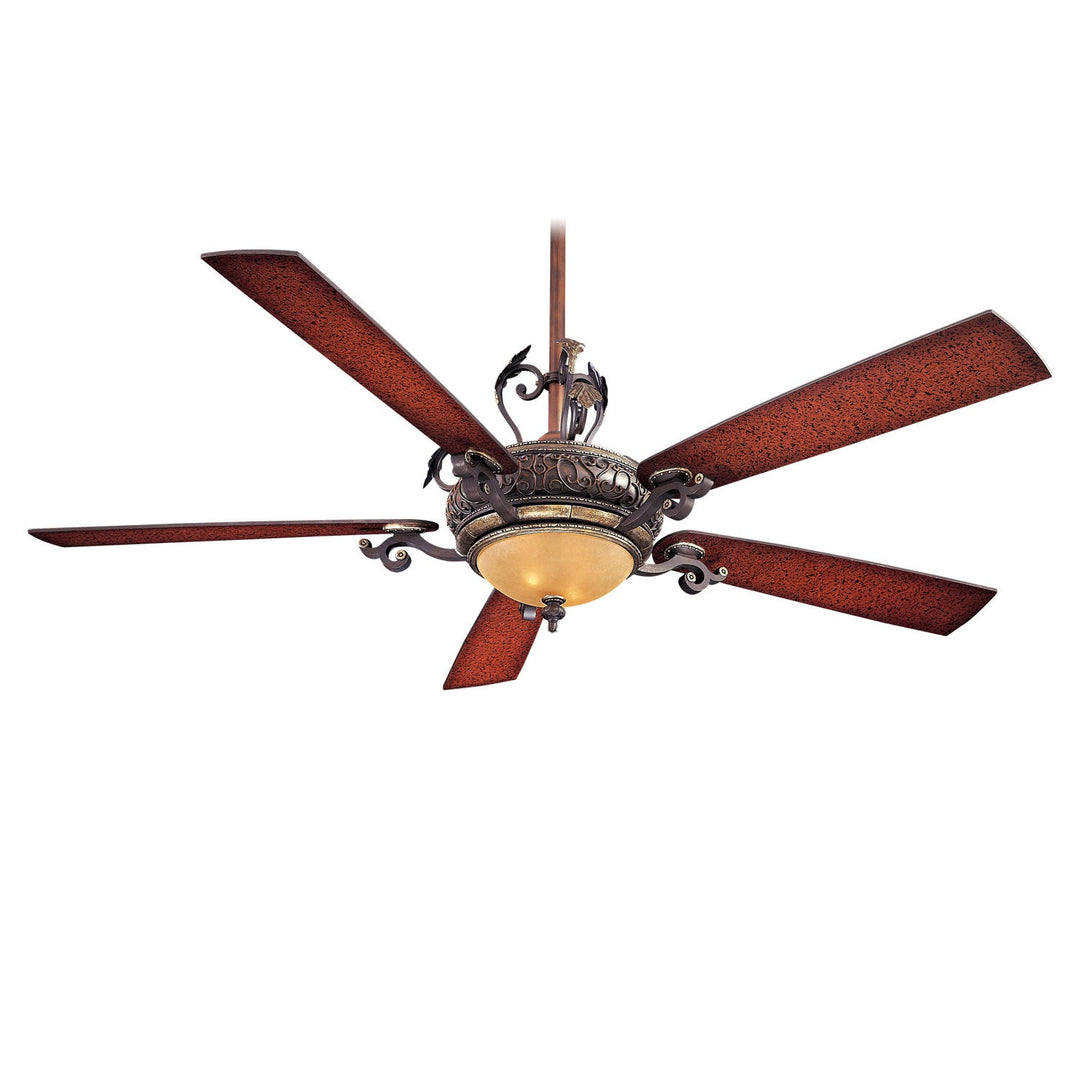
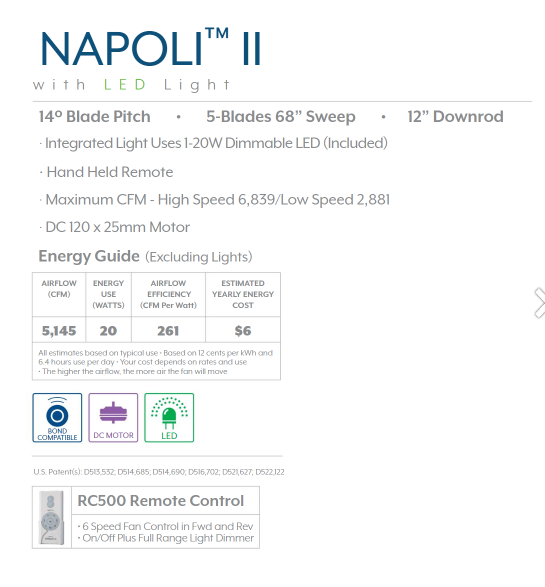
A DC motor ceiling fan runs on direct current and gives you six speeds instead of three. It draws less power than a comparable AC fan, runs quieter at low speed, and reverses from the remote rather than a switch on the housing. Every fan on this page has a DC motor.
DC versus AC, honestly
| DC motor | AC motor | |
|---|---|---|
| Speeds | 6 (Fanimation DC fans offer 16) | 3 |
| Power draw | Lower for the same airflow | Higher |
| Noise at low speed | Very quiet | Can hum |
| Reverse for winter | From the remote | Switch on the fan housing |
| Control | Needs its own remote or compatible wall control | Works with most standard switches |
| Price | Higher up front | Lower |
A note from our electrician
"Six speeds matters more than people think. With three speeds you're picking between too little and too much. With six, there's always one that's right, and you end up running the fan slower — which is quieter and uses less power." — John Betancourt, Fan Diego, Specialty Electric, CSLB #1113915
Questions we get asked
Is a DC motor ceiling fan better than AC?
On a large fan, yes. A DC motor moves more air per watt, gives you finer speed control and runs quieter. On a small bedroom fan you are less likely to notice the difference, and an AC fan will do the job for less money. Spend the extra where the motor is doing real work.
Why do DC fans have six speeds?
Because the electronics allow it. An AC motor is switched between three fixed windings. A DC motor is controlled electronically, so the manufacturer can divide the range as finely as they like. Six is the common standard; Fanimation's DC fans go to sixteen.
Do DC ceiling fans use less electricity?
Yes, for the same amount of air moved. The saving is real but modest in absolute terms — a ceiling fan is already one of the cheapest things in the house to run. The bigger practical gain is that six speeds let you run the fan slower, and a fan on low costs less than the same fan on high.
Will a DC fan work with my existing wall switch?
Usually not, and this is the one that catches people. A DC fan needs its own remote or a compatible wall control, and most will not work on a standard dimmer or a three-speed fan switch. Putting a DC fan on an existing dimmer can damage the receiver. If you are replacing an older fan, plan on the control changing too.
Are DC ceiling fans quieter?
At low and medium speed, noticeably. The hum some people hear from an AC fan comes from the motor windings, and a DC motor does not produce it the same way. At full speed you mostly hear air, not motor, on either type.
Can a DC fan be installed on a sloped or vaulted ceiling?
Most can, with the right downrod and in some cases a sloped-ceiling adapter. Blades must sit at least seven feet above the floor, which is federal code, so on a high or vaulted ceiling the downrod length matters as much as the fan.
Bundle the fan and the installation
Buy the fan and have us install it and we will quote the whole job in one go — fan, installation, the control a DC fan needs, and haul-away of the old one. Because DC fans usually require a new wall control or remote, doing both together is cheaper and faster than doing them separately. Call (858) 292-9244 and we will put it together.
Installation by our own licensed electricians — Specialty Electric, CSLB #1113915, with a lifetime labor warranty. $240 for the first fan, $180 for each additional fan on the same visit, in San Diego County.
Trade pricing
Contractors, designers, builders and property managers receive up to 25% off through our trade program, with dedicated account support and job quoting on larger orders. Apply to the trade program.
Looking for maximum airflow? See our high CFM ceiling fans, all 9,000 CFM and up.